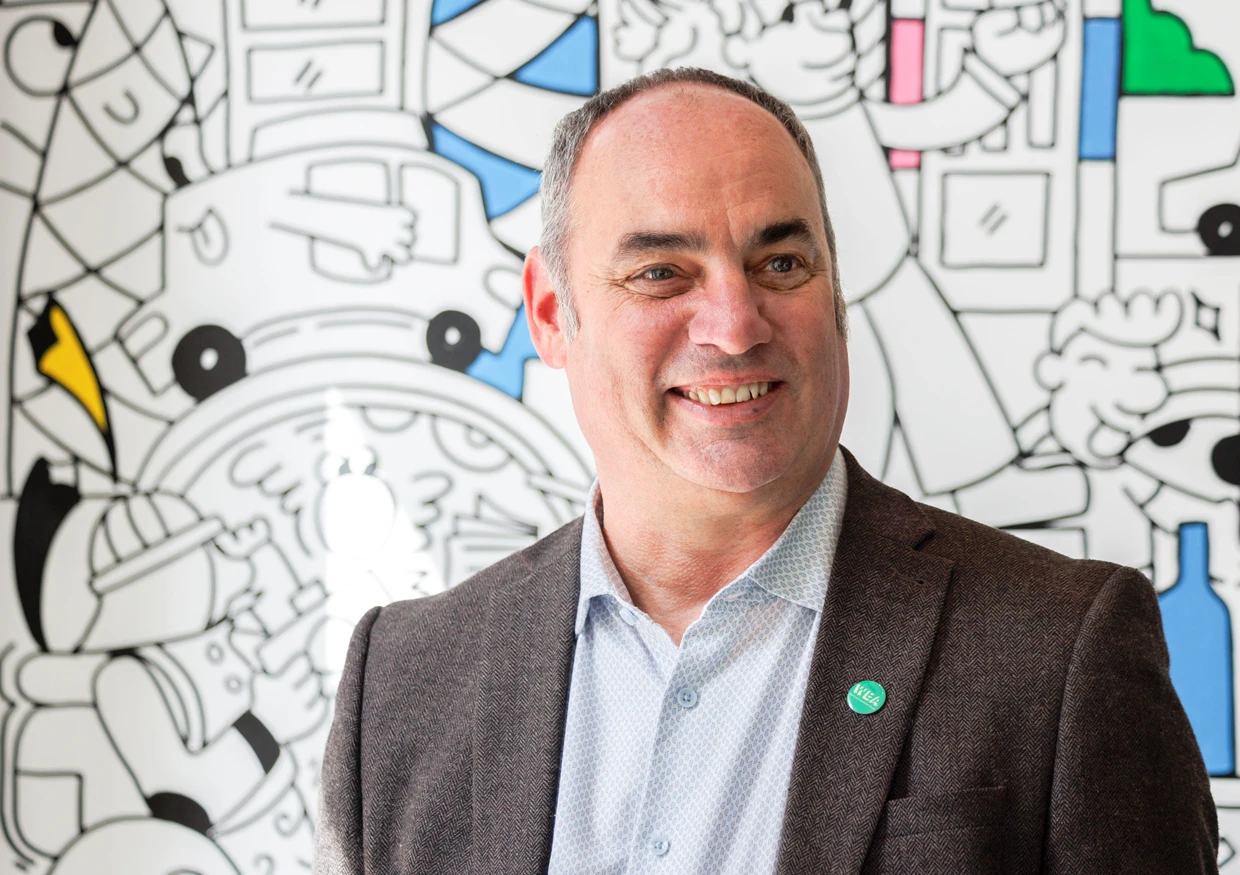
Who better to promote adult learning than Simon Parkinson who left school at 16 as did many of his friends he played football with? Simon grew up in Salford and subsequently went to both Salford and Warwick universities, collecting a Masters in Public Administration. He’s now Chief Exec of WEA (Workers Educational Association), the largest charitable provider of adult education across England and Scotland, that was founded back in 1903, and has a £30 million turnover.
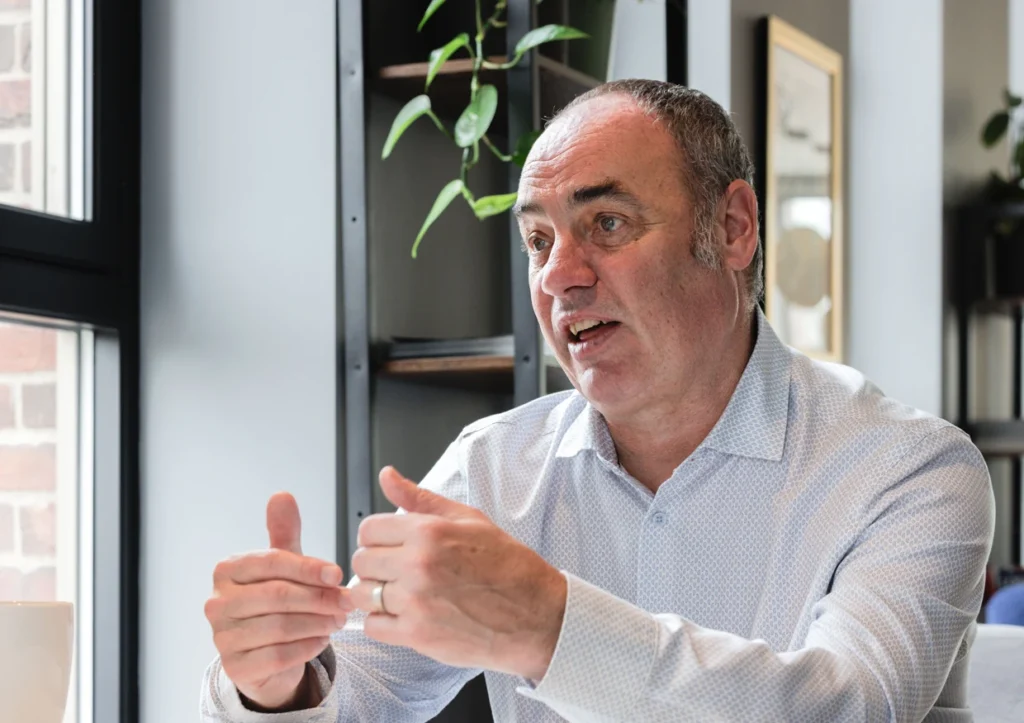
Predominantly based in West Yorkshire, Simon met with the Lifelong Learning campaign on one of his regular London trips. Here he stays in Aldgate East, as it’s handy for WEA’s London office in Luke Street, EC2.
Every year there are more than 1,000 WEA courses and around 14-15,000 learners. With the current focus on employability, many adults pick English and maths courses, aiming for entry level jobs, and there’s always demand for ESOL (English for Speakers of Other Languages). But WEA courses are incredibly varied, from film to Spanish; parenting to cooking on a budget. Some courses are run online, but 70% are delivered in community venues around England and Scotland. And as all WEA staff can take one free course a year, Simon has discovered astrology and history and seems very tempted by a football course due to be run during the World Cup 2026, about The Day They Banned Women’s Football.
Learning together
“Lifelong learning is one of the keys to many of the issues that we face in the country,” says Simon whose long career in adult education has helped him become very aware of the mismatch between what politicians are saying about adult education and the wide benefits people get from lifelong learning – not least because it can bring divided communities together.
To recap, Simon was principal of the Co-operative College for five years (which celebrated its centenary in 2019) and before that was Director of Education, Learning and Work at the Royal Mencap Society (Mencap). He’s currently the Vice-Chair of SOLIDAR and also a former commissioner on the Greater Manchester Co-operative Commission.
“There’s a big push at the moment in terms of adult learning for skills for jobs to address some of the shortages in the labour market. That’s important, and WEA do a fair bit of employability-, functional- and sector-based skills. But we strongly believe – and there’s lots of evidence – in the power of adult learning and lifelong learning to help mental health and wellbeing; physical health and wellbeing; to combat isolation and loneliness and to build community cohesion. Coming together and learning something is really powerful, almost regardless of the curriculum,” explains Simon.
WEA learners report (in their annual learner survey) “overwhelmingly that they meet people that they wouldn’t normally have met by doing a WEA course. One of the outcomes of doing that course is they’ve got more awareness and more respect for others than they may have had at the start of the course. Those are massively important outcomes for us as a country, at the moment. We think we’ve got to win that wide argument about how lifelong learning is more than just a nice thing to do. It has benefits at the economic level, individual level and community level,” he says with real conviction.
“If you’ve had a poor experience of formal education and been raising a family and want to come back to the world of working it isn’t just about sharpening the CV or doing interview techniques, it’s confidence building. Imagine somebody taking that brave step to walk into a community venue near where they live and go, ‘I’ve been trying to get a job and I’ve been told I need some help with my maths or my English for any sort of entry-level customer service job’. It starts with confidence building and giving agency to learners so that they can take it from there.”
Get ready now
To help meet those wide needs, glue communities together and unlock a range of talents Simon explains how WEA thinks of itself as a “roll-on, roll-off provider,” offering courses all year round that aren’t necessarily run to match the traditional three-term school calendar. Many adult learners are “almost locked into the idea that education is termly and they have to sign up in September for a course that runs to Christmas. We do still plan courses that way, but we’re constantly putting courses on,” says Simon. “Our hope is we pick somebody up on a confidence building course and we get them back into learning so we can progress them through different courses. The worst thing that could happen is somebody takes that brave step to do a six-week programme of learning they’ve really enjoyed, and then we go ‘oh we’ve got nothing running again now till next September’. Once they’ve got into the habit of learning let’s keep going with them.”
Setting the right goals
Considering the focus the UK takes on getting education right for young people it is perhaps strange that lifelong learning has no national strategy. Alongside this, money for adult learning and lifelong learning funds are shrinking within the GLA and some devolved areas.
“The Adult Skills Fund, which is the main funding envelope for adult learning and lifelong learning, is all being narrowed down to focusing on courses that will give people a skill that will get them a job or a better job,” explains Simon. Controversially this led to the GLA recently stating it would no longer fund history and art appreciation because they didn’t feel that these curriculum areas were important for Londoners.
The outcry in London, including a campaign by WEA, hasn’t yet led to a change of plan.
“We try and campaign against that narrative as much as we can,” says Simon. One challenge is the way that, “the starting point for many funding conversations about lifelong learners is productivity, ‘Will a course get them a job’?” explains Simon pointing out that this misses the way learning, “can build confidence and wellbeing, and release talent of all ages across all areas of London.”
Simon and WEA are sure that empowering people to join the courses they want to try is a way to help people build connections and critical thinking. Simon is certain that unlocking talent this way will also have the benefit the policy makers so want – productivity. As Simon puts it “productivity is going to be an outcome. If we get it right, hopefully growth and productivity would be a really positive outcome, plus we’d have more community and improved health and wellbeing.”
Just as Albert Camus (once an Algerian goalie) said, “All that I know most surely about morality and obligation I owe to football”, adult learning of any sort also teaches life lessons by giving people confidence, community and as an added bonus helps secure jobs.