Key points:
- Learning supports recovery and rebuilding independence
- Tailored support enables participation and progress
- Small steps build confidence, connection and purpose
Evidence content
For learners recovering from serious illness or disability, the starting point is often not employment, but regaining basic skills, confidence and a sense of self.
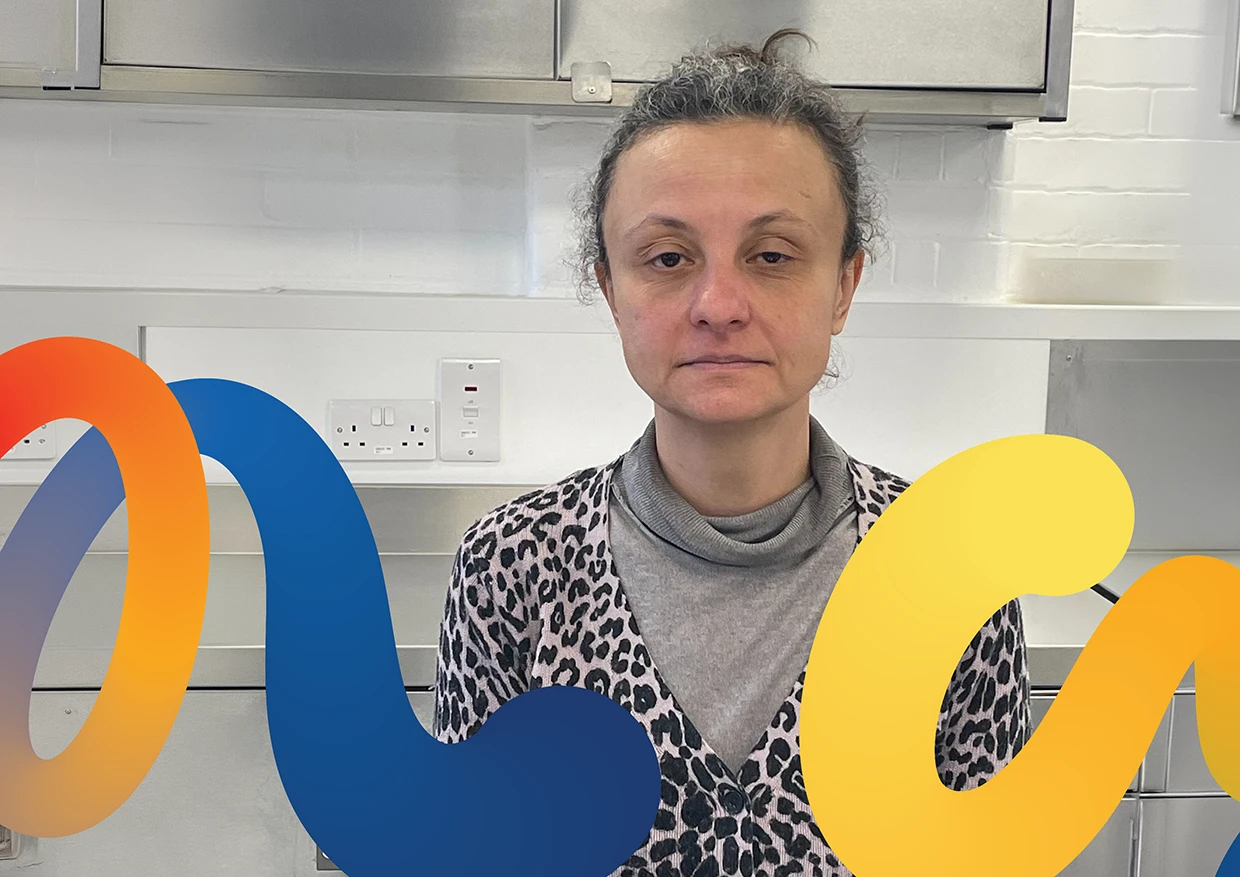
Nina Angelova had a successful corporate career before being diagnosed in 2021 with an acquired neurological disorder that left her fully disabled and bedbound. The impact was profound, affecting her speech, mobility and coordination, and requiring her to relearn many everyday activities.
While waiting for specialist rehabilitation, Nina joined the Mindlift programme at Adult Learning Lewisham – a series of courses designed to support adults with mental health and physical health challenges to take small, manageable steps forward.
A key part of the approach is personalised support. Staff worked closely with Nina to identify courses that would suit both her interests and her needs, including cooking, art and creative writing. Adjustments were made to ensure she could participate comfortably, particularly in managing sensory challenges such as noise and environment.
When Nina first joined, the experience was overwhelming. Over time, the structured and supportive environment helped her begin to re-engage.
Cooking became an important part of this process – providing both a practical skill and a reason to leave the house, from shopping for ingredients to attending sessions.
She had previously found cooking stressful, but it has since become a calming activity, helping her build confidence and re-establish routine.
The programme also helped address isolation. As Nina’s health declined, her social circle had reduced significantly, and she often went days without speaking to anyone. Attending classes gave her a reason to connect with others and feel part of a community again.
Small, structured goals played a crucial role in her progress – from travelling independently on public transport to completing everyday tasks such as shopping.
Through this process, Nina began to rediscover parts of herself. Despite being told at school that she was “not good at art”, she has grown in confidence through creative activities. She has also developed an interest in cooking and now volunteers at a homeless charity, helping prepare weekly meals.
Creative writing has provided a further outlet, allowing her to reflect on her experiences and process her journey.
Attending courses has played a vital role in her recovery, helping her strengthen communication, coordination and reconnect with a sense of purpose.
This experience highlights the wider role of adult learning in rehabilitation. By providing structured, flexible and supportive environments, it enables learners to rebuild independence, reconnect socially and take steps toward future opportunities.
For Nina, this includes the possibility of returning to work in the future – something that once felt out of reach.