

Key points:
- English skills unlock access to work and life
- Local provision creates accessible learning routes
- Learning builds confidence, connection and progression
Evidence content
For many learners, developing English language skills is the foundation for participating fully in life and work in the UK.
Across London, adult learning providers offer a mix of formal and informal ESOL provision, delivered through main sites and local community settings. This creates multiple access points, making it easier for learners to engage and continue learning as their circumstances change.
Wandsworth’s approach combines structured courses with informal, community-based learning, often delivered in partnership with local voluntary and community sector organisations. This helps reach learners who may not initially engage with formal education and supports progression into further learning and employment.
A key part of this model is creating safe, supportive environments where learners feel confident to participate. This was also highlighted in the 2025 Wandsworth Matrix Report, where an assessor noted:
“One thing that united all learners was how safe they said they felt… WCLL has succeeded in creating a safe space for all.”
This sense of safety is particularly important for learners who may have experienced trauma or face ongoing challenges in their daily lives.
Learning is also closely linked to real-world outcomes. Alongside language development, learners receive support with employability skills such as job searching, CV writing and preparing for interviews.

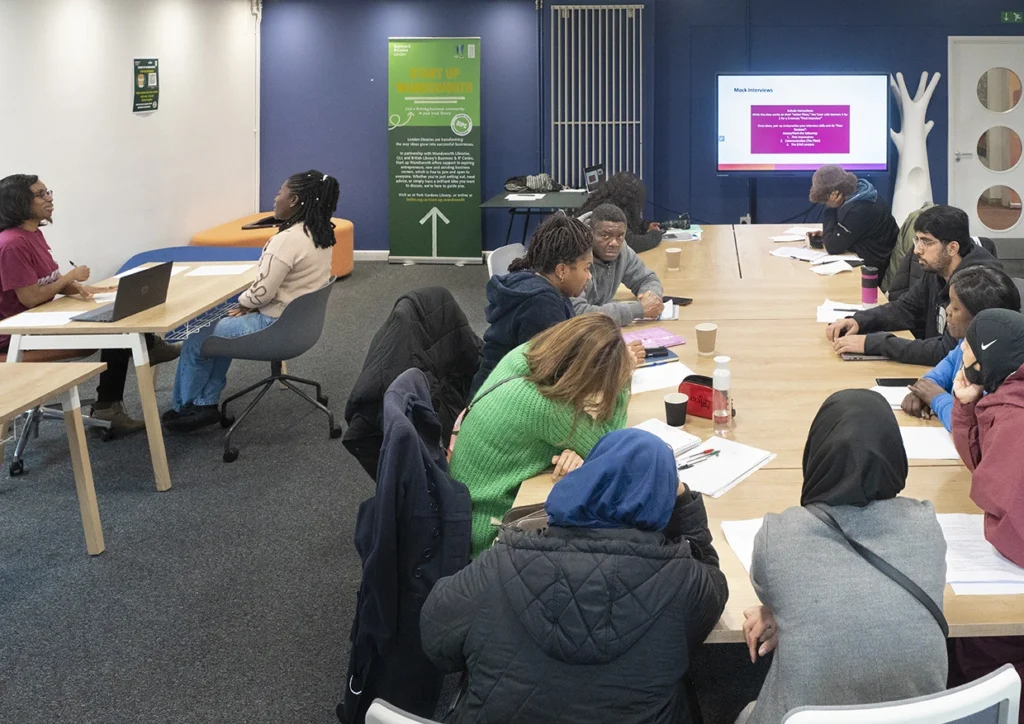
As one learner, Alyona, explains:
“In my view, the courses played a decisive role in what I have now: I found a job, I feel comfortable among English-speaking people, I can start and maintain a conversation without fear… and I made new friends here.”
Another learner highlights the importance of applying these skills in a workplace context:
“The Conversation Class improved my communication and interpersonal skills… I learned techniques for writing a C.V., expressing my work experience clearly, and maintaining a professional demeanour.”
These experiences reflect a broader pattern. ESOL learning supports not only language development, but confidence, independence and social connection – all of which are essential for progression into work.
By combining accessible local provision, community partnerships and employability support, this model helps learners move from initial engagement through to participation, and ultimately into employment.o return to work in a way that is achievable, supported and sustainable.